Sri Lanka Travel Guide 2026: Your Complete Adventure Companion
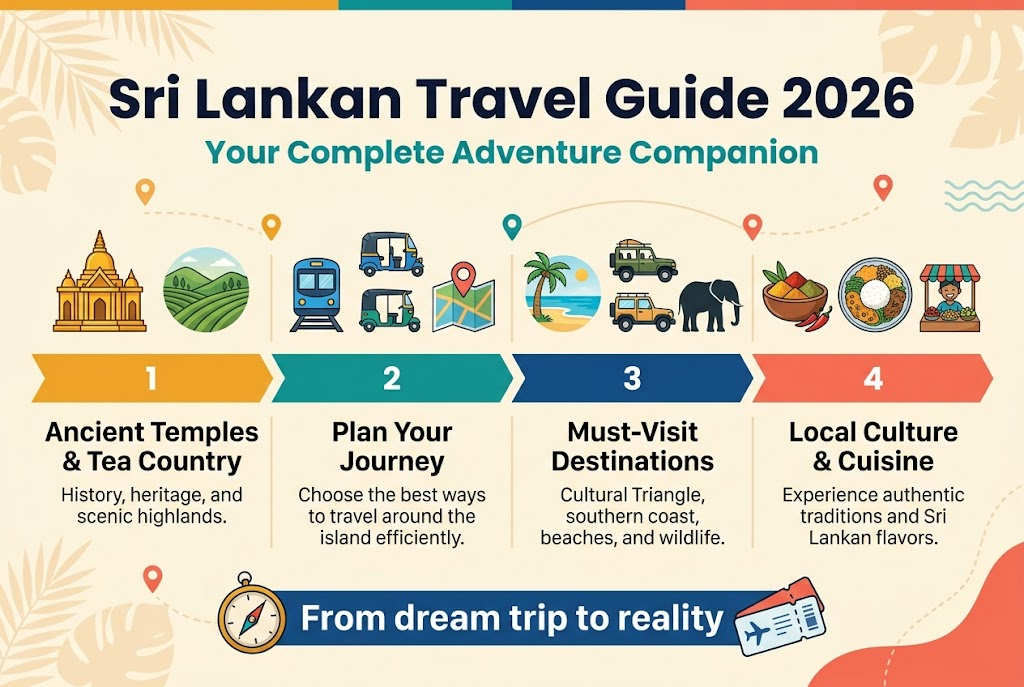
Sri Lanka packs incredible diversity into a small island nation—from ancient temples and tea plantations to pristine beaches and wildlife safaris. This comprehensive Sri Lanka travel guide 2026 is perfect for first-time visitors, returning travelers, and anyone planning their dream trip to this South Asian gem.
You’ll discover how to plan your journey from start to finish, including the best transportation methods to get around the island efficiently. We’ll also explore the must-visit destinations that showcase Sri Lanka’s natural beauty and rich history, from the cultural triangle to the southern coast. Plus, you’ll get insider tips on experiencing authentic local culture and savoring the incredible flavors that make Sri Lankan cuisine so special.
Ready to turn your Sri Lankan adventure from a dream into reality? Let’s dive in.
Essential Travel Planning for Your Sri Lankan Adventure
Best time to visit for optimal weather and experiences
Sri Lanka’s tropical climate means you can visit year-round, but timing matters for the best experience. The island has two monsoon seasons that affect different regions at different times.
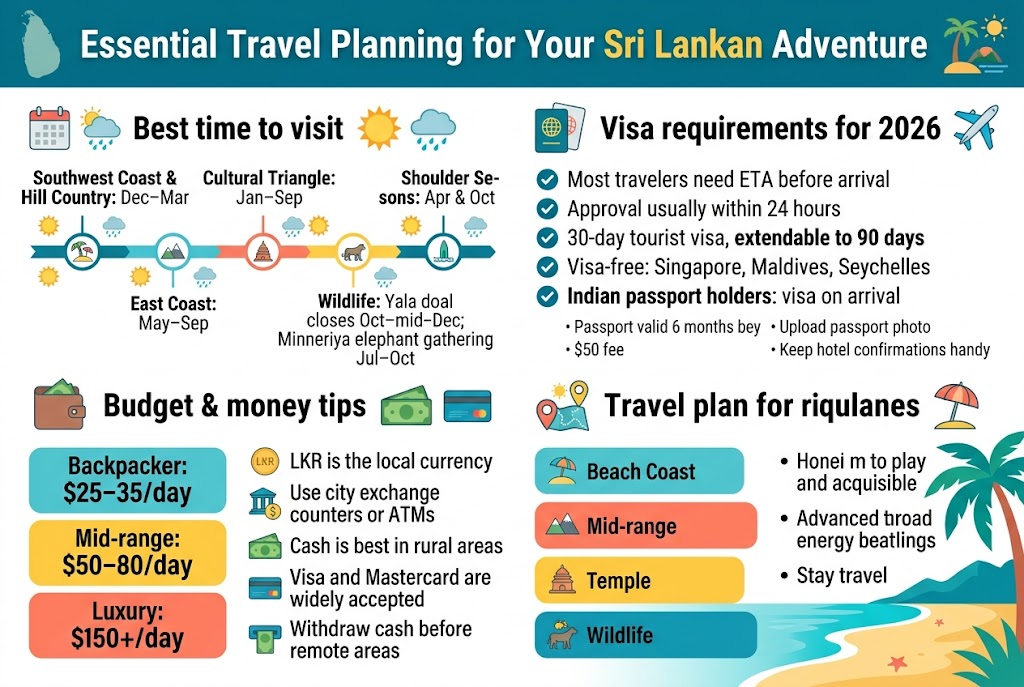
Southwest Coast and Hill Country shine from December to March when dry weather dominates. This period brings perfect beach conditions to Galle, Mirissa, and Unawatuna, while the central highlands offer crisp mornings and sunny afternoons ideal for tea plantation visits and hiking.
East Coast reaches its prime from May to September. Trincomalee, Arugam Bay, and Passikudah beaches deliver calm seas and consistent sunshine during these months. Surfers flock to Arugam Bay between June and August for world-class waves.
The cultural triangle covering Anuradhapura, Polonnaruwa, and Sigiriya works well year-round, though January to September offers the most comfortable conditions for temple exploration and rock climbing.
Shoulder seasons (April and October) bring brief but intense rainfall, yet they offer advantages too. Tourist crowds thin out, prices drop, and the landscape explodes with lush greenery. Rain typically comes in short bursts rather than all-day downpours.
Wildlife enthusiasts should plan around specific seasons. Yala National Park closes during October to mid-December, while elephant gathering at Minneriya peaks between July and October.
Visa requirements and entry procedures for 2026
Most travelers need an Electronic Travel Authorization (ETA) before arriving in Sri Lanka. The online application process takes minutes and approval typically comes within 24 hours, though applying 72 hours ahead provides peace of mind.
Standard tourist visa allows 30 days with possible extension to 90 days. Citizens from Singapore, Maldives, and Seychelles enter visa-free for 30 days. Indian passport holders can obtain a visa on arrival.
Application requirements include a passport valid for six months beyond your departure date, return flight ticket, proof of accommodation for the first night, and sufficient funds (minimum $15 per day). Upload a clear passport photo and pay the $50 fee online.
Entry process at Colombo airport moves smoothly with your printed ETA confirmation. Immigration officers may ask about your itinerary and accommodation plans, so keep hotel confirmations handy.
COVID-19 updates for 2026 have largely relaxed, but check current health protocols before departure. Some countries still require vaccination certificates or health declarations.
Multiple entry visas suit travelers planning side trips to India or Maldives. Business visas allow longer stays for work purposes. Student and transit visas serve specific needs.
Extension procedures happen at the Department of Immigration in Colombo or major cities. Bring passport photos, proof of funds, and expect processing within 5-7 days.
Budget planning and currency exchange tips
Daily budgets in Sri Lanka vary dramatically based on travel style. Backpackers can manage on $25-35 daily, covering guesthouse stays, local transport, street food, and basic attractions. Mid-range travelers spending $50-80 daily enjoy comfortable hotels, private transport, restaurant meals, and guided tours. Luxury seekers allocating $150+ access high-end resorts, private drivers, fine dining, and exclusive experiences.
Currency basics center on Sri Lankan Rupees (LKR). Exchange rates fluctuate, but expect roughly 300-330 LKR per US dollar in 2026. Avoid exchanging money at airports where rates are poor. Instead, use authorized exchange counters in cities or withdraw from ATMs for better rates.
Cash remains king outside major cities. Rural guesthouses, small restaurants, tuk-tuks, and local shops prefer cash payments. Carry small denominations for easier transactions and bargaining.
Credit cards work in upscale hotels, restaurants, and tourist-oriented businesses. Visa and Mastercard have wider acceptance than American Express. Notify your bank about Sri Lankan travel to prevent card blocks.
ATMs are widespread in cities but scarce in remote areas. Stock up on cash before heading to places like Ella, Arugam Bay, or Yala. Daily withdrawal limits typically cap at 40,000-50,000 LKR.
Money-saving strategies include eating at local restaurants instead of hotel dining rooms, using public buses for long distances, staying in family-run guesthouses, and bargaining for tuk-tuk rides. Group tours often cost less than private arrangements for popular attractions.
Must-have travel insurance and health precautions
Comprehensive travel insurance protects against medical emergencies, trip cancellations, and lost belongings. Sri Lankan healthcare quality varies significantly between urban private hospitals and rural facilities, making insurance essential for serious medical situations.
Medical coverage should include emergency evacuation, which can cost $50,000+ for airlift to Singapore or Bangkok. Basic insurance covering $100,000 medical expenses provides adequate protection. Adventure activities like surfing, hiking, or wildlife safaris may require additional coverage.
Routine vaccinations including hepatitis A and B, typhoid, and Japanese encephalitis are recommended. Yellow fever vaccination is required only if arriving from infected countries. Malaria risk exists in certain areas, though Colombo and hill country are generally safe.
Health precautions start with drinking bottled or properly filtered water. Avoid raw vegetables, street food from questionable vendors, and undercooked meat. Dental emergencies happen frequently from hard foods, so pack a dental first-aid kit.
Common ailments include stomach issues from dietary changes, sunburn from intense tropical sun, and mosquito-borne illnesses. Pack oral rehydration salts, strong sunscreen, insect repellent containing DEET, and basic medications for fever and pain.
Hospital recommendations in Colombo include Nawaloka Hospital, Apollo Hospital, and Asiri Hospital for private care. Public hospitals provide basic treatment but may lack equipment and English-speaking staff.
Emergency contacts should include your insurance provider’s 24-hour helpline, embassy contact information, and local emergency number 119 for police, fire, and ambulance services.
Transportation Options in Sri Lanka Travel Guide to Navigate the Island Efficiently
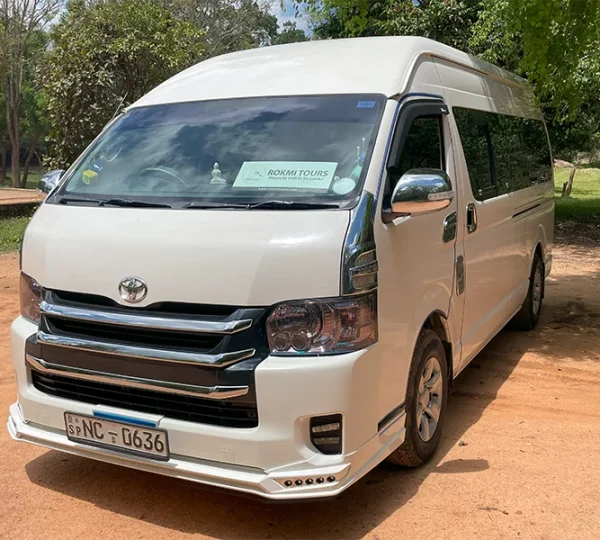
Rent Toyota KDH Van side view
Domestic flights for quick island hopping
Sri Lanka’s domestic flight network offers the fastest way to cover long distances across the island. SriLankan Airlines operates regular flights between Colombo’s Bandaranaike International Airport and Mattala Rajapaksa International Airport in the south, cutting travel time from 4-5 hours by road to just 1 hour.
Cinnamon Air provides seaplane services that are perfect for reaching remote locations like cultural sites in the north or pristine beaches. These scenic flights double as sightseeing tours, giving you aerial views of tea plantations, ancient ruins, and coastal landscapes. Book domestic flights well in advance, especially during peak season (December to March), as seats fill up quickly.
The main drawback is cost – domestic flights are significantly more expensive than other transport options. However, if you’re on a tight schedule or want to maximize your time exploring rather than traveling, the investment pays off.
Train journeys through scenic hill country
Railway travel in Sri Lanka is legendary for good reason. The train from Kandy to Ella ranks among the world’s most beautiful train rides, winding through emerald tea plantations, misty mountains, and cascading waterfalls. The journey takes about 7 hours, but every minute offers postcard-worthy scenery.
Three classes are available: third class (basic wooden seats), second class (cushioned seats), and first class (reserved seating with large windows). Book first or second class for comfort, but third class gives you the most authentic local experience. Reserve seats online through the Sri Lanka Railways website or buy tickets at the station.
Popular routes include:
- Colombo to Kandy: 3 hours through rural landscapes
- Kandy to Ella: The famous hill country route
- Colombo to Galle: Coastal journey with ocean views
- Colombo to Anuradhapura: Access to ancient cities
Trains run slower than buses but offer unmatched comfort and views. The observation car on certain routes provides panoramic windows – worth the small upgrade fee.
Bus networks for budget-friendly local travel
Sri Lanka’s extensive bus network connects virtually every town and village on the island. Government buses are incredibly affordable but often crowded, while private air-conditioned buses cost slightly more but offer better comfort for longer journeys.
Government buses (CTB – Ceylon Transport Board) are the cheapest option, with fares rarely exceeding $2-3 for long distances. They stop frequently and can get packed during rush hours. Look for red buses with destination signs in Sinhala, Tamil, and English.
Private buses come in various categories:
- Regular private buses (slightly more comfortable than government ones)
- Semi-luxury buses with cushioned seats
- Super luxury coaches with air conditioning
Major routes run frequently throughout the day. The Colombo-Kandy route has buses every 15-20 minutes. For destinations like Sigiriya, Polonnaruwa, or Yala National Park, expect 2-4 departures daily.
Buy tickets directly from conductors on board. Long-distance buses often have luggage compartments underneath. Bring small bills as conductors may not have change for large notes.
Tuk-tuk and taxi services for short distances
Tuk-tuks are Sri Lanka’s iconic three-wheeled vehicles, perfect for short trips and navigating narrow streets that cars can’t access. They’re everywhere in cities and tourist areas, offering flexibility and adventure in equal measure.
Negotiating fares: Always agree on the price before starting your journey. Tourist areas have inflated prices, so expect to pay 2-3 times the local rate. A 5-minute ride typically costs 200-500 rupees ($0.60-$1.50). For longer journeys, negotiate a half-day or full-day rate.
Safety tips: Choose tuk-tuks with proper license plates and avoid late-night rides in isolated areas. Many drivers speak basic English and can serve as informal tour guides.
Modern alternatives: Apps like PickMe and Uber operate in Colombo and major cities, offering fixed pricing and cashless payments. These are more expensive than traditional tuk-tuks but provide transparency and safety.
Regular taxis are available through hotels or taxi companies. They cost more than tuk-tuks but offer air conditioning and comfort for longer distances. Airport transfers and inter-city travel are best done by taxi or pre-arranged transport.
Car rental guidelines for independent exploration
Renting a car gives you complete freedom to explore Sri Lanka at your own pace, reaching remote beaches, hidden temples, and mountain villages that public transport doesn’t serve well.
Driving requirements: You need an International Driving Permit along with your home country license. Rental agencies can arrange temporary Sri Lankan licenses if needed.
Driving conditions: Traffic in Colombo and Kandy can be chaotic, with buses, tuk-tuks, motorcycles, and pedestrians sharing narrow roads. Road signs are often in local languages only. GPS works well in major areas but can be unreliable in remote regions.
Rental options:
- Self-drive: Budget $25-50 per day for a basic car, $60-100 for SUVs
- Car with driver: $40-80 per day including driver’s meals and accommodation
- Motorcycle/scooter: $10-20 per day for experienced riders
Most travelers opt for a car with driver, especially first-time visitors. Drivers know local roads, can navigate traffic, and often speak English. They also help with directions, restaurant recommendations, and cultural insights.
Fuel stations are common on main roads but sparse in remote areas. Always start with a full tank when heading to national parks or mountain regions. Carry cash as not all stations accept cards.
Top Destinations That Define the Sri Lankan Experience
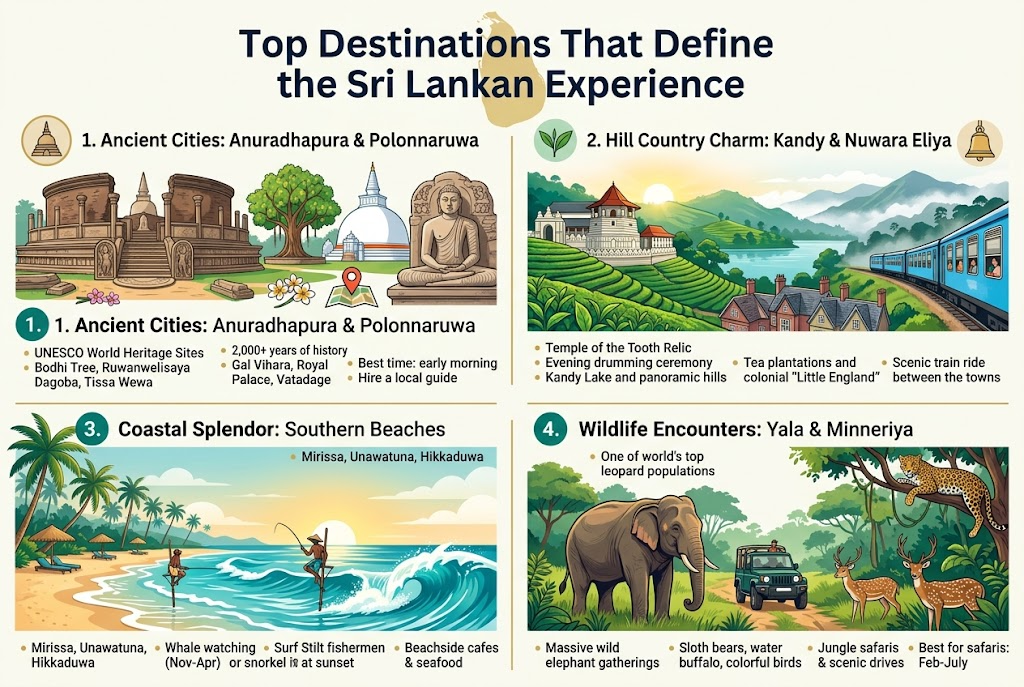
Ancient Cities of Anuradhapura and Polonnaruwa
Step back over 2,000 years into Sri Lanka’s golden age by exploring these UNESCO World Heritage Sites. Anuradhapura, once the capital of ancient Ceylon, stretches across a vast archaeological landscape dotted with towering dagobas (Buddhist stupas) that reach skyward like ancient skyscrapers. The sacred Bodhi Tree here holds special significance as it grew from a cutting of the original tree under which Buddha attained enlightenment.
Walking through Anuradhapura feels like wandering through an outdoor museum where every stone tells a story. The Ruwanwelisaya Dagoba, gleaming white against the blue sky, remains an active pilgrimage site where you’ll witness locals offering flowers and prayers. The ancient irrigation systems, including massive tanks (reservoirs) like Tissa Wewa, showcase the engineering brilliance that sustained these civilizations for centuries.
Polonnaruwa, the medieval capital that followed Anuradhapura, offers a more compact but equally impressive experience. The Gal Vihara’s four magnificent Buddha statues carved from granite represent the pinnacle of ancient Sinhalese sculpture. The Royal Palace complex and the circular Vatadage temple demonstrate sophisticated architectural planning that rivals contemporary designs.
Both sites reward early morning visits when golden light bathes the ancient stones and temperatures remain comfortable. Hire a knowledgeable local guide who can decode the intricate carvings and share legends passed down through generations.
Hill Country Charm in Kandy and Nuwara Eliya
The central highlands offer a refreshing escape from coastal heat, wrapped in emerald tea plantations that cascade down mountain slopes like green waterfalls. Kandy, the last royal capital, maintains its cultural heartbeat around the sacred Temple of the Tooth Relic. This UNESCO site houses what’s believed to be Buddha’s tooth, making it the most revered Buddhist temple in Sri Lanka.
The daily evening ceremony at the temple creates an atmosphere of devotion rarely experienced elsewhere. Drummers announce the ritual while hundreds of pilgrims gather in the golden-lit halls. Beyond the temple, Kandy Lake provides peaceful morning walks, and the surrounding hills offer panoramic views of this historic city nestled in a valley.
Climbing higher into the mountains, Nuwara Eliya transports you to a colonial-era hill station that British planters nicknamed “Little England.” The cool climate and Victorian architecture create an almost European atmosphere at 6,000 feet above sea level. Rolling tea estates surround the town, where you can tour working plantations like Pedro Estate or Mackwoods Labookellie to witness the entire tea-making process from leaf to cup.
The train journey between Kandy and Nuwara Eliya ranks among the world’s most scenic railway rides. Hanging out of blue-painted train cars while winding through misty mountains and tea gardens has become an iconic Sri Lankan experience that shouldn’t be missed.
Pristine Beaches Along the Southern and Eastern Coasts
Sri Lanka’s coastline serves up diverse beach experiences, from the well-developed southern shores to the wild, untouched eastern beaches. The southern coast around Mirissa and Weligama has evolved into a laid-back surfer’s paradise where you can catch waves in the morning and spot blue whales in the afternoon. Mirissa Bay offers some of the best whale watching in Asia, with blue whales and sperm whales frequenting these waters from November to April.
Unawatuna’s horseshoe bay provides calmer waters perfect for swimming and snorkeling, while the nearby Galle Fort adds historical depth to your beach time. This 17th-century Dutch fortification, now filled with boutique shops and cafes, creates a unique backdrop for sunset walks along its ramparts.
The eastern coast tells a different story entirely. Arugam Bay attracts international surfers seeking consistent point breaks and an authentic local vibe. The surrounding area remains refreshingly uncommercialized, with traditional fishing villages and pristine stretches of sand that you might have entirely to yourself.
Trincomalee, further north on the eastern shore, combines excellent beaches with deep cultural history. Nilaveli and Uppuveli beaches offer powder-soft sand and crystal-clear waters, while Pigeon Island provides world-class snorkeling just offshore. The best time to visit the east coast runs from April to September, when the southwest monsoon brings rain to other parts of the island but leaves these shores sunny and dry.
Wildlife Safaris in Yala and Udawalawe National Parks
Sri Lanka packs incredible wildlife diversity into a relatively small island, making safari experiences both accessible and rewarding. Yala National Park holds the distinction of having the world’s highest density of leopards, though these spotted cats require patience and luck to spot. The park’s varied ecosystems support over 200 bird species, including the striking peacock and the endemic Sri Lankan junglefowl.
Game drives in Yala reveal a landscape of grasslands, forests, and coastal lagoons where elephants bathe in natural pools and sloth bears lumber through the underbrush. The park’s Block 1 sees the heaviest tourist traffic, but venturing into the less-visited blocks often yields more authentic wildlife encounters and better photography opportunities.
Udawalawe National Park focuses primarily on elephant watching, housing over 250 of these gentle giants in a grassland setting that makes spotting them relatively easy. The nearby Elephant Transit Home provides a heartwarming experience where orphaned elephant calves receive care before returning to the wild.
For the best safari experience, book early morning or late afternoon drives when animals are most active. Choose a reputable tour operator with experienced trackers who understand animal behavior and know the parks intimately. The dry season from June to September offers optimal wildlife viewing as animals congregate around water sources, though the parks remain rewarding year-round for different reasons.
Cultural Experiences That Connect You with Local Heritage
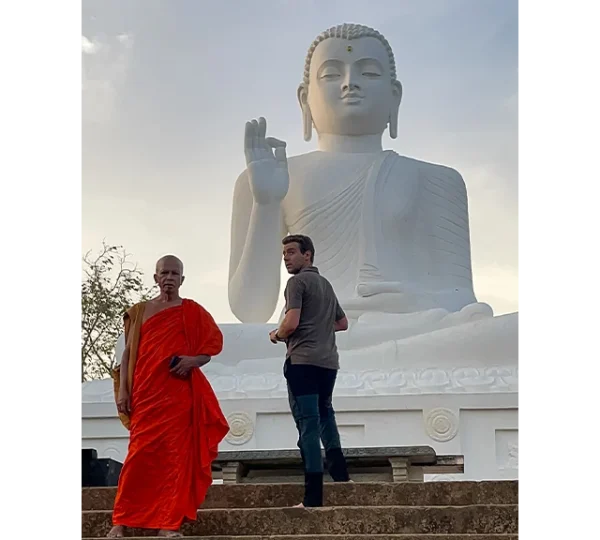
Temple Etiquette and Significant Buddhist Sites
When visiting Sri Lankan temples, covering shoulders and legs shows respect for sacred spaces. Remove shoes and hats before entering, and keep your feet pointed away from Buddha statues. Photography rules vary between sites, so ask permission first.
The Temple of the Sacred Tooth Relic in Kandy holds Buddhism’s most precious artifact and draws pilgrims worldwide. Daily puja ceremonies happen at 5:30 AM, 9:30 AM, and 6:30 PM, creating an atmosphere thick with incense and devotion. Arrive early to witness the ancient rituals up close.
Dambulla Cave Temple showcases 2,000 years of Buddhist art across five caves carved into golden rock. The intricate ceiling paintings and 150 Buddha statues tell stories spanning centuries. Climb the steep path during cooler morning hours for the best experience.
Anuradhapura’s ancient city reveals Buddhism’s deep roots in Sri Lanka. The sacred Bodhi Tree, grown from a cutting of the original tree where Buddha gained enlightenment, still attracts devotees after 2,300 years. Walking among the massive dagobas and monastery ruins connects you to the island’s spiritual foundation.
Traditional Dance Performances and Music Festivals
Kandyan dance performances burst with energy through elaborate costumes, thundering drums, and acrobatic movements. Catch evening shows at the Kandy Cultural Centre or during the Esala Perahera festival in July/August. The masked devil dances tell stories of healing and protection, while peacock dances celebrate nature’s beauty.
The Esala Perahera transforms Kandy into a spectacle of lights, elephants, and traditional music. Over ten nights, decorated elephants parade through streets while drummers, dancers, and fire performers create an unforgettable celebration. Book accommodation months ahead, as this UNESCO-recognized festival draws crowds from around the globe.
Village drumming circles in rural areas offer intimate encounters with traditional music. Join sessions in Dambulla or Sigiriya villages where families have passed down rhythms for generations. The hypnotic beats of the geta beraya drums create connections that transcend language barriers.
Local Craft Workshops and Artisan Villages
Ambalangoda’s mask-making tradition transforms devil dance masks into works of art. Watch craftsmen carve kaduru wood into intricate expressions representing demons, animals, and healing spirits. Many workshops offer hands-on experiences where you can paint your own mask under expert guidance.
Dumbara Valley’s silver smiths create jewelry using techniques unchanged for centuries. Visit family-run workshops where fourth-generation artisans shape silver into traditional Kandyan designs. The delicate filigree work requires years to master, and purchasing pieces directly supports these skilled craftspeople.
Pinnawala’s paper-making cooperative produces handmade stationery from elephant dung and recycled materials. The process transforms waste into beautiful writing paper, notebooks, and greeting cards. Participate in workshops to create your own paper while learning about sustainable practices.
Bentota’s wood carving studios showcase Sri Lanka’s furniture-making heritage. Ebony, teak, and jackfruit wood become intricate sculptures, jewelry boxes, and decorative items. Watch master carvers work with traditional chisels and learn basic techniques during half-day workshops.
Tea Plantation Tours and Tasting Experiences
The Hill Country’s emerald tea plantations offer immersive experiences beyond simple tours. At Lipton’s Seat near Haputale, sunrise reveals the landscape that inspired Sir Thomas Lipton’s empire. The viewpoint overlooks tea estates stretching to the horizon, with workers already picking leaves in the cool morning air.
Factory tours at plantations like Pedro Estate or Mackwoods reveal the journey from leaf to cup. Watch withering, rolling, oxidation, and firing processes that determine each tea’s character. Professional tea tasters guide you through flavor profiles, teaching how altitude, rainfall, and processing create distinct tastes.
High-grown estates above 4,000 feet produce Ceylon tea’s most prized varieties. Nuwara Eliya’s Lover’s Leap Estate offers overnight stays in restored colonial bungalows where you wake to mist-covered tea gardens. Evening tastings pair different teas with traditional Sri Lankan sweets.
Tea picking experiences let you work alongside estate workers, learning proper plucking techniques and understanding the physical demands of tea cultivation. Many plantations donate a portion of tour proceeds to worker welfare programs, making your visit contribute to community development.
Ella’s Nine Arches Bridge provides stunning backdrops for tea experiences. Local guides arrange picnic tastings where you sample various Ceylon teas while trains cross the colonial-era viaduct. The combination of mountain scenery, engineering marvels, and perfect tea creates unforgettable memories.
Culinary Journey Through Sri Lankan Flavors
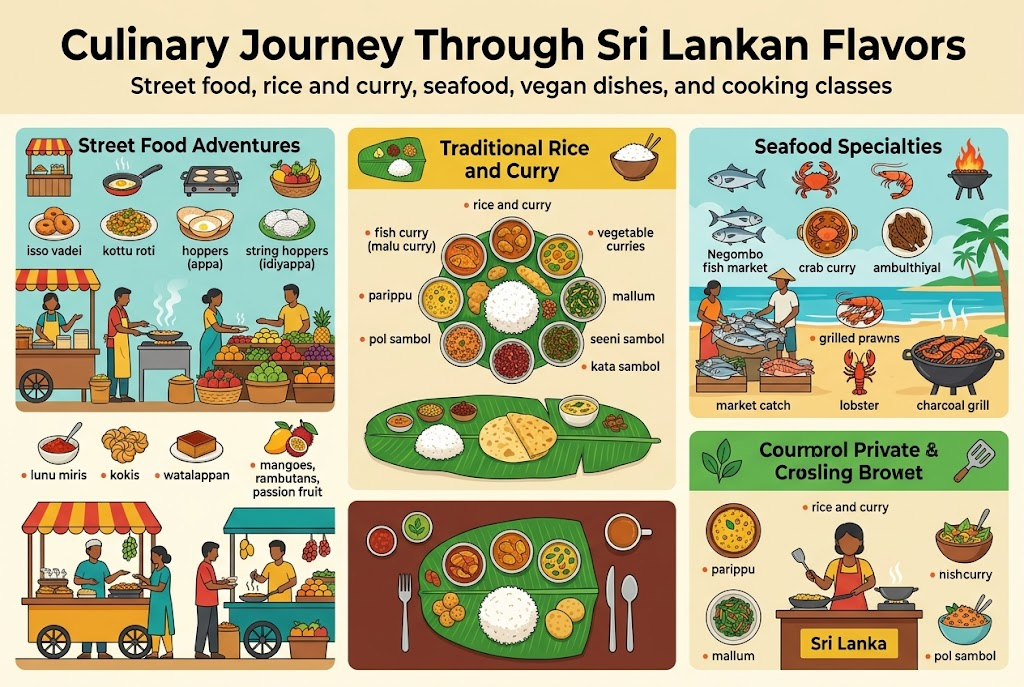
Street food adventures in busy markets
Wandering through Sri Lanka’s bustling markets creates an explosion of aromas, colors, and flavors that tell the story of the island’s rich culinary heritage. Pettah Market in Colombo buzzes with vendors selling isso vadei (shrimp fritters) that crackle in hot oil, while steaming bowls of kottu roti get chopped rhythmically on metal griddles. The sound becomes almost musical as vendors slice flatbread with vegetables, eggs, and your choice of chicken, beef, or seafood.
Street-side stalls offer hoppers (appa) – bowl-shaped pancakes made from fermented rice flour and coconut milk. Egg hoppers come with a perfectly cooked egg nestled in the center, while string hoppers (idiyappa) resemble delicate rice noodle nests. Pair these with lunu miris (onion chili sambol) or coconut sambol for an authentic taste experience.
Don’t miss the sweet treats either. Kavum and kokis appear during festival seasons, while watalappan (coconut custard pudding infused with jaggery and spices) satisfies any dessert craving. Fresh tropical fruits like mangoes, rambutans, and passion fruit get sold by enthusiastic vendors who’ll slice them fresh right in front of you.
Traditional rice and curry dining experiences
Rice and curry represents the heart of Sri Lankan cuisine, transforming simple ingredients into complex, layered meals that change throughout the country. A proper Sri Lankan rice and curry spread includes fragrant basmati or red rice surrounded by multiple curries, each bringing different flavors, textures, and spice levels to create a balanced meal.
The experience starts with choosing your curries. Fish curry (malu curry) features chunks of fresh fish swimming in rich coconut milk gravy infused with curry leaves, pandan, and aromatic spices. Chicken curry varies by region – some versions use roasted curry powder for depth, others rely on fresh herbs and coconut cream for richness. Vegetable curries showcase seasonal produce: drumstick curry, jackfruit curry, or green bean curry each offering unique flavor profiles.
No rice and curry meal feels complete without the essential accompaniments. Parippu (dhal curry) provides protein and comfort, while mallum (shredded greens with coconut) adds freshness and nutrition. Different sambols bring heat and tang – pol sambol (coconut relish), seeni sambol (caramelized onion relish), or kata sambol (crushed chili relish) each serving distinct purposes on your plate.
Traditional restaurants and family-run establishments often serve these meals on banana leaves, creating an authentic dining experience that connects you directly to local customs and traditions.
Seafood specialties along coastal regions
Sri Lanka’s extensive coastline delivers some of the freshest seafood experiences in South Asia, with each coastal region developing signature preparations that reflect local fishing traditions and spice preferences. Negombo’s fish markets showcase the daily catch before sunrise, where vendors display red snapper, kingfish, prawns, crabs, and squid still glistening from ocean waters.
Crab curry stands as the crown jewel of Sri Lankan seafood, particularly the mud crab preparation found in coastal restaurants. The shells crack under the weight of thick, spicy gravy made with roasted curry powder, coconut milk, and curry leaves. Eating becomes a hands-on experience requiring finger bowls and plenty of napkins, but the sweet crab meat mixed with aromatic spices creates unforgettable flavors.
Ambulthiyal represents another coastal classic – chunks of tuna cooked with goraka (a souring fruit) and spices until the liquid evaporates, leaving intensely flavored, dark-colored fish pieces. This dry curry keeps well in tropical heat and showcases how Sri Lankan cooks preserve seafood without refrigeration.
Grilled seafood appears at beachside restaurants from Mirissa to Trincomalee. Fresh prawns, lobster, and fish get marinated in garlic, chili, and lime before hitting the charcoal grills, creating smoky flavors that pair perfectly with coconut rice and cold beer while watching sunset over the Indian Ocean.
Vegetarian and vegan-friendly local options
Sri Lankan cuisine naturally accommodates plant-based eating through centuries of Buddhist influence and abundant tropical produce. Many traditional dishes contain no animal products, making the island surprisingly vegan-friendly despite not always advertising itself as such.
Coconut forms the foundation of countless vegan dishes. Coconut milk curries showcase vegetables like pumpkin, green beans, or eggplant in rich, creamy gravies without any dairy. Fresh coconut gets grated into mallum dishes – chopped greens mixed with coconut, onions, chili, and lime juice creating nutritious, flavorful sides that appear at every traditional meal.
Kiribath (coconut milk rice) offers a festive vegan option traditionally served during special occasions. The rice cooks slowly in thick coconut milk until creamy and rich, then gets cut into diamond shapes and served with lunu miris or jaggery for sweet and savory variations.
Temple food provides excellent vegan dining experiences, especially around Kandy and Anuradhapura. Buddhist temples often serve simple but delicious meals featuring jackfruit curries, vegetable dishes, and herbal preparations that avoid onions and garlic according to religious dietary guidelines.
Local markets overflow with tropical fruits, vegetables, and legumes. King coconuts provide refreshing drinks, while fruits like mangoes, pineapples, and passion fruit satisfy sweet cravings naturally. Many roadside stalls specialize in fresh fruit juices and smoothies without added dairy.
Cooking classes to master authentic recipes
Learning to cook Sri Lankan food provides deeper cultural understanding beyond simply eating the cuisine. Cooking classes across the island range from home-based experiences with local families to professional culinary schools, each offering unique insights into regional cooking techniques and family recipe traditions.
Popular cooking class experiences begin with spice garden tours where you’ll identify curry leaves, cardamom, cinnamon, and other aromatic ingredients growing naturally. Instructors explain how different spice combinations create distinct flavor profiles and teach you to adjust heat levels according to personal preferences. Grinding spices fresh creates much more intense flavors than pre-ground alternatives.
Coconut preparation features prominently in most classes. You’ll learn to scrape fresh coconut meat, extract thick and thin coconut milk, and understand how timing affects curry consistency. Many recipes require specific coconut milk timing – when to add thick milk for richness versus thin milk for cooking vegetables properly.
Classes typically focus on complete meal preparation rather than single dishes. You might prepare rice and curry with multiple accompaniments, learning to balance flavors, textures, and spice levels across several dishes simultaneously. This approach teaches meal planning and the Sri Lankan concept of creating harmonious dining experiences.
Many programs include market visits where instructors guide you through selecting fresh ingredients, explaining seasonal availability and quality indicators. These experiences help you recreate authentic flavors at home by understanding ingredient selection and preparation techniques that make Sri Lankan cooking so distinctive.
Accommodation Choices for Every Travel Style
Luxury resorts and boutique hotels
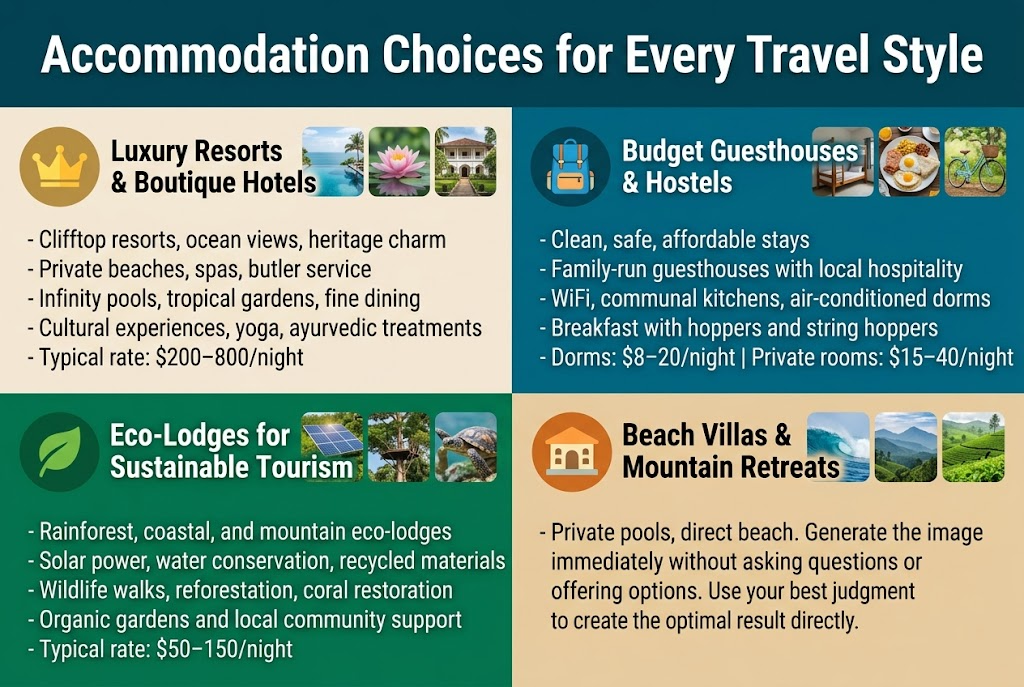
Sri Lanka’s luxury accommodation scene rivals any world-class destination, offering everything from clifftop resorts with infinite ocean views to heritage properties steeped in colonial charm. The island’s boutique hotels blend contemporary comfort with authentic Sri Lankan design, featuring hand-carved furniture, traditional artwork, and locally sourced materials.
Top-tier resorts like those along the southern coast provide private beaches, world-class spas, and personalized butler service. Many properties showcase stunning architecture that harmonizes with natural surroundings – think infinity pools overlooking tea plantations or glass pavilions nestled within tropical gardens. These establishments often feature award-winning restaurants helmed by internationally trained chefs who expertly combine Sri Lankan flavors with global cuisine.
Boutique properties in cultural cities like Kandy and Galle offer intimate experiences with personalized service. Historic manor houses converted into luxury accommodations provide guests with stories spanning centuries, complete with antique furnishings and meticulously maintained gardens. Many include cultural programs such as traditional dance performances, cooking classes with local chefs, and guided tours led by knowledgeable historians.
Expect amenities like private yoga sessions, ayurvedic treatments using indigenous herbs, and exclusive excursions to hidden gems off the typical tourist trail. These accommodations typically range from $200-800 per night, with rates varying by season and location.
Budget-friendly guesthouses and hostels
Sri Lanka’s budget accommodation network has evolved dramatically, offering clean, safe, and comfortable options that won’t break the bank. Family-run guesthouses provide authentic local experiences where hosts often become informal tour guides, sharing insider knowledge about their neighborhoods and hidden attractions.
Modern hostels in popular destinations feature air-conditioned dormitories, reliable WiFi, communal kitchens, and social areas perfect for meeting fellow travelers. Many include breakfast featuring traditional Sri Lankan dishes like hoppers and string hoppers, giving budget travelers a taste of local cuisine without additional cost.
Guesthouses in smaller towns and villages offer incredible value, with private rooms often available for $15-30 per night. These family-operated establishments provide genuine hospitality, home-cooked meals, and opportunities to experience daily Sri Lankan life firsthand. Hosts frequently arrange transportation, suggest local activities, and share stories about their region’s history and culture.
Beach towns and hill stations feature budget accommodations with stunning locations – imagine waking up to ocean waves or mountain vistas for a fraction of resort prices. Many properties offer bicycle rentals, laundry services, and tour booking assistance. Backpacker hostels typically range from $8-20 per night for dormitory beds, while private rooms in guesthouses cost $15-40 nightly.
Eco-lodges for sustainable tourism
Sri Lanka’s commitment to environmental conservation shines through its impressive collection of eco-lodges that minimize environmental impact while maximizing guest experiences. These properties demonstrate how sustainable tourism can protect natural habitats while supporting local communities.
Rainforest eco-lodges feature elevated walkways that preserve ground-level ecosystems, solar power systems, and water conservation programs. Guests can observe wildlife from tree-top platforms, participate in reforestation projects, and learn about endemic species through guided nature walks led by trained naturalists. Many lodges source food from on-site organic gardens and partner with local farmers to provide fresh, seasonal ingredients.
Coastal eco-accommodations focus on marine conservation, offering programs like turtle watching, coral restoration activities, and beach clean-up initiatives. These properties often use recycled materials in construction, implement waste reduction strategies, and support nearby fishing communities through employment opportunities and sustainable fishing practices.
Mountain eco-lodges integrate seamlessly with their surroundings, using traditional building techniques and locally sourced materials. Guests can participate in organic farming, learn traditional crafts from local artisans, and explore pristine wilderness areas with minimal environmental impact. Many properties donate portions of their profits to conservation projects and community development initiatives.
These accommodations typically cost $50-150 per night and include educational programs, guided activities, and meals featuring organic, locally grown ingredients.
Beach villas and mountain retreats
Private villas and secluded retreats offer the ultimate in personalized luxury and privacy, perfect for families, groups, or couples seeking exclusive experiences. Beach villas along Sri Lanka’s pristine coastline feature direct ocean access, private pools, and dedicated staff including chefs, housekeepers, and security personnel.
These properties range from contemporary architectural masterpieces with floor-to-ceiling windows and minimalist design to traditional colonial-style bungalows with wraparound verandas and tropical gardens. Many include private beaches, boat access for snorkeling and diving excursions, and outdoor dining areas perfect for sunset dinners with feet in the sand.
Mountain retreats nestled in the hill country provide cool climates, panoramic views, and access to hiking trails through tea plantations and cloud forests. These properties often feature fireplaces for chilly evenings, expansive terraces for morning tea while watching sunrise over rolling hills, and gardens filled with endemic flowers and herbs.
Villa rentals include full-service options with meal preparation, activity planning, and transportation arrangements. Staff can organize everything from private yoga sessions and spa treatments to cultural excursions and adventure activities. Many properties partner with local operators to provide exclusive experiences like private temple visits, cooking classes with renowned chefs, or guided wildlife safaris.
Rental prices vary significantly based on location, size, and services, typically ranging from $150-1000 per night, with many offering weekly rates and seasonal discounts for extended stays.
Practical Tips for a Smooth Sri Lankan Journey
Communication basics and useful Sinhala phrases
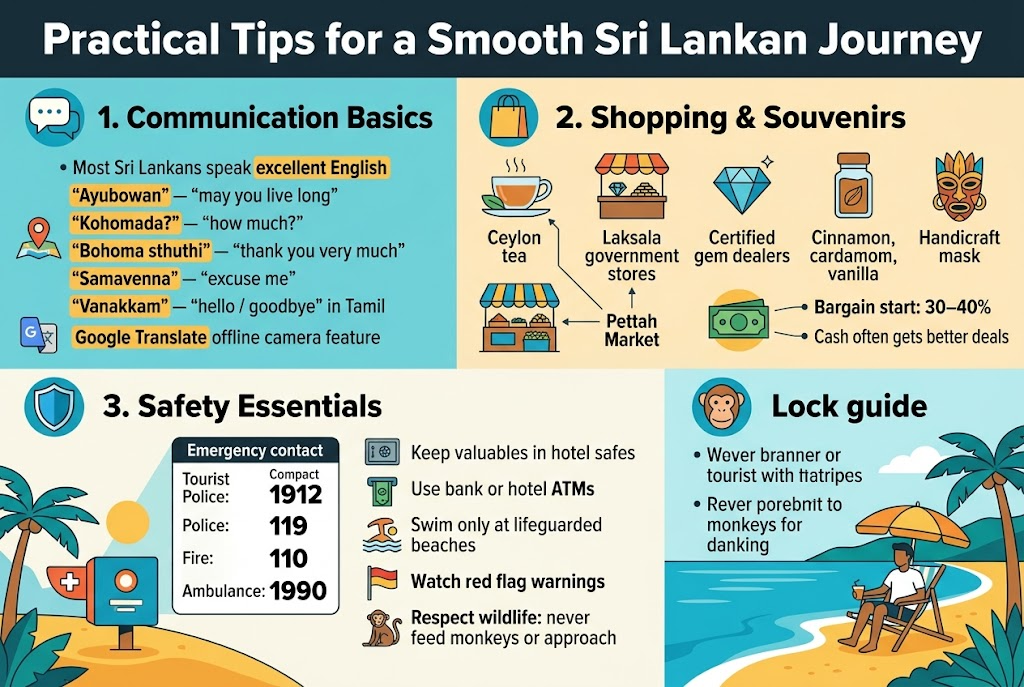
Most Sri Lankans speak excellent English, especially in tourist areas, so getting around won’t be a problem. However, learning a few basic Sinhala phrases will earn you instant smiles and respect from locals. Start with “Ayubowan” (ah-yu-bo-wan) – the traditional greeting meaning “may you live long.” When shopping at local markets, try “Kohomada?” (how much?) and “eka gana ganai?” (what about this price?). Simple words like “bohoma sthuthi” (thank you very much) and “samavenna” (excuse me) go a long way.
Tamil is also widely spoken, particularly in the north and east. If you’re visiting those regions, “Vanakkam” serves as both hello and goodbye. Download translation apps like Google Translate with offline capabilities – the camera feature works wonders for reading menus and signs.
Shopping guidelines and souvenir recommendations
Sri Lanka offers incredible shopping opportunities, from bustling street markets to upscale boutiques. Tea remains the most popular souvenir – head to the Mlesna Tea Centre in Colombo or any estate in the hill country for authentic Ceylon tea. Pettah Market in Colombo provides the full sensory experience with spices, textiles, and gems at bargain prices.
For authentic handicrafts, visit the Laksala government stores found in major cities. They guarantee quality and fair pricing for items like batik clothing, wooden masks, and brass ornaments. Gem shopping requires extra caution – stick to certified dealers and always ask for authenticity certificates. Popular gems include sapphires, rubies, and the famous blue moonstone.
Spice shopping works best at dedicated spice gardens where you can learn about cultivation and processing. Cinnamon, cardamom, and vanilla make excellent gifts. When bargaining at markets, start at 30-40% of the quoted price and work your way up. Cash payments often get you better deals than cards.
Safety considerations and emergency contacts
Sri Lanka ranks among Asia’s safer destinations, but basic precautions apply everywhere. The Tourist Police operates in major tourist areas – their contact number is 1912. For general emergencies, dial 119 (police), 110 (fire), or 1990 (ambulance). Save these numbers in your phone immediately upon arrival.
Petty theft occasionally occurs in crowded areas like train stations and markets. Keep valuables in hotel safes and carry copies of important documents. Avoid displaying expensive jewelry or large amounts of cash. When using ATMs, choose those inside banks or hotels rather than standalone machines.
Ocean safety deserves special attention. Strong currents and undertows affect many beaches, particularly on the south and west coasts. Swim only at lifeguarded beaches and heed red flag warnings. Monsoon seasons bring rough seas – the southwest monsoon affects the west and south coasts (May to September), while the northeast monsoon impacts the east and north (October to January).
Wildlife encounters, while exciting, require respect and distance. Never feed monkeys or approach elephants, even in national parks. Stick to designated paths and follow guide instructions.
Cultural customs and respectful behavior guidelines
Buddhism shapes daily life for most Sri Lankans, so showing respect for religious practices creates positive interactions. Remove shoes and hats before entering temples, and dress modestly with covered shoulders and knees. Never point your feet toward Buddha statues or turn your back on them when taking photos. Some temples prohibit photography entirely, so ask permission first.
Public displays of affection should be minimal – even holding hands might draw stares in conservative areas. Modest dress codes apply beyond temples too, especially in rural regions. Avoid shorts and sleeveless tops when visiting local communities.
The head holds special significance in Sri Lankan culture. Never touch someone’s head, even children, as this is considered highly disrespectful. Similarly, avoid pointing with your index finger – use an open hand or nod in the direction instead.
Dining customs include eating with your right hand only, as the left hand is considered unclean. When invited to someone’s home, removing shoes at the entrance shows respect. Bringing a small gift like fruit or sweets is appreciated but not mandatory.
Tipping culture exists but isn’t aggressive. Round up restaurant bills by 10% or leave small change. For hotel staff, 100-200 rupees per service works well. Tuk-tuk drivers don’t expect tips unless they provide exceptional service or wait for extended periods.
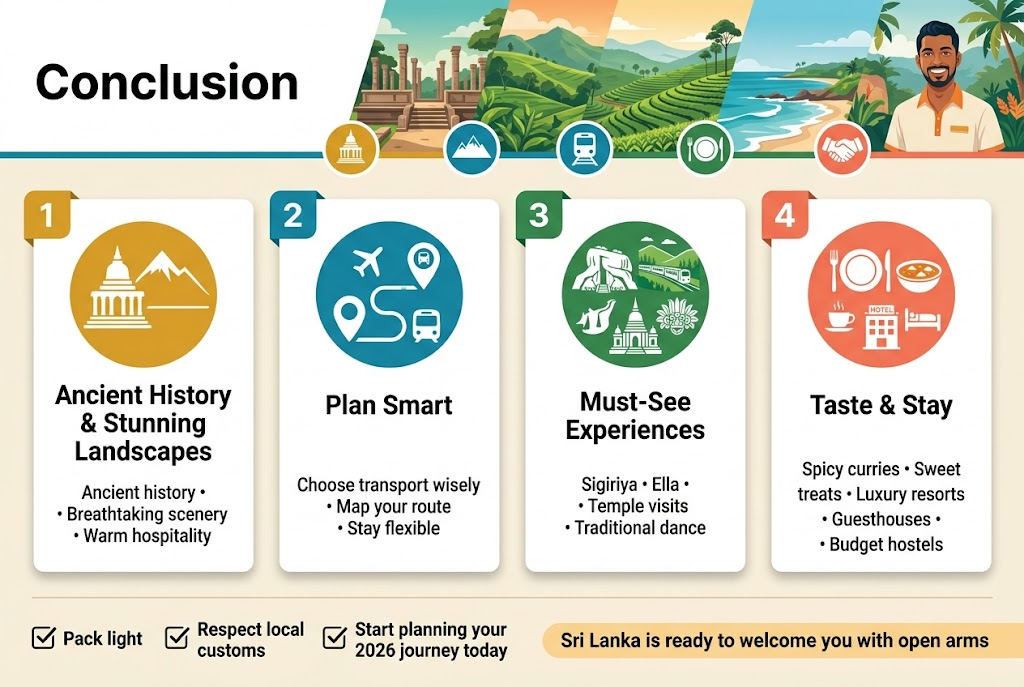
Sri Lanka offers an incredible blend of ancient history, stunning landscapes, and warm hospitality that makes every moment of your journey memorable. From planning your trip and choosing the right transportation to exploring breathtaking destinations like Sigiriya and Ella, the island provides endless opportunities for discovery. The rich cultural experiences, from temple visits to traditional dance performances, give you genuine connections with local communities, while the diverse cuisine introduces your taste buds to unforgettable flavors ranging from spicy curries to sweet treats.
Smart planning makes all the difference in getting the most out of your Sri Lankan adventure. Whether you prefer luxury resorts, cozy guesthouses, or budget-friendly hostels, there’s accommodation that fits your style and budget. Pack light, respect local customs, and stay flexible with your itinerary to embrace unexpected discoveries along the way. Sri Lanka is ready to welcome you with open arms – start planning your 2026 journey today and prepare for an experience that will leave you planning your return visit before you’ve even left.