Ceylon Cinnamon Experience: Discover Its History, Flavor, and Traditional Production.
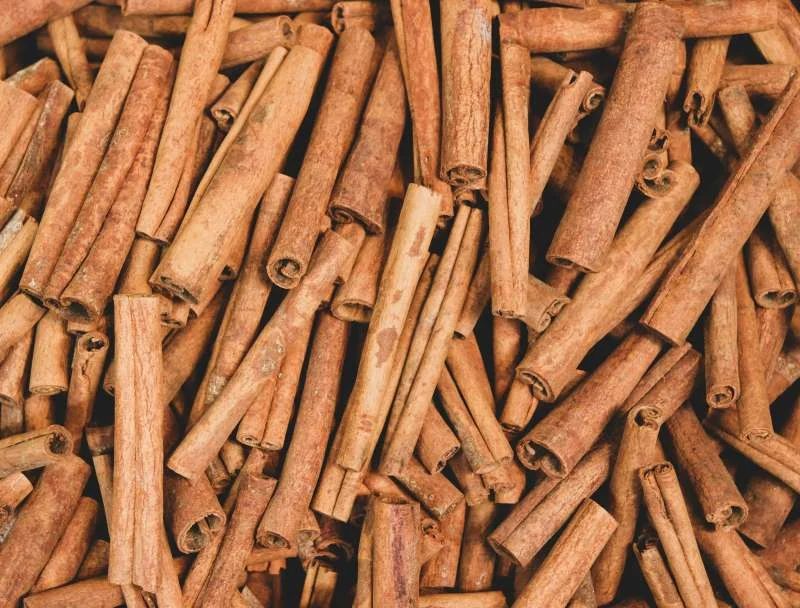
Ceylon cinnamon quills
Sri Lankan cinnamon is one of the island’s most treasured spices. Known internationally as Ceylon cinnamon, it has a delicate flavor, a distinctive aroma, and a history closely connected to Sri Lanka’s culture and international trade. For travelers visiting the island, discovering how this spice is grown and carefully prepared offers a wonderful opportunity to experience traditional Sri Lankan life.
A cinnamon experience in Galle is particularly interesting for visitors who want to explore beyond beaches and historical attractions. In the southern region, you can learn about cinnamon cultivation, watch skilled workers peel the bark by hand, and discover how the raw material becomes the familiar cinnamon sticks used around the world.
From the history of the spice trade to the traditional production process, health considerations, and shopping tips, this guide explains everything you need to know about Sri Lankan cinnamon before planning your visit.
What Makes Sri Lankan Cinnamon Special?
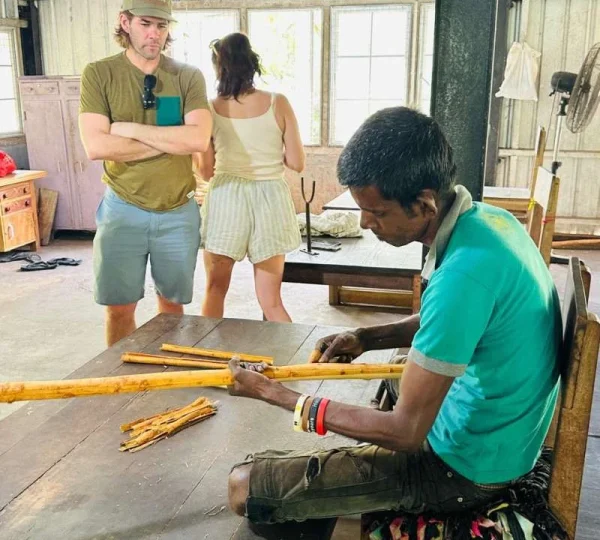
cinnamon peeling Sri Lanka
Sri Lankan cinnamon, scientifically known as Cinnamomum verum, is commonly called Ceylon cinnamon or true cinnamon. It comes from an evergreen tree grown in Sri Lanka’s tropical climate, particularly in the southern and southwestern regions.
Although several types of cinnamon are sold around the world, Ceylon cinnamon is valued for its delicate flavor, fine texture and naturally low coumarin content.
What is the difference between Ceylon cinnamon and other cinnamon?
Cinnamon sold internationally may come from different species. Cassia cinnamon, for example, is generally stronger in flavor and has thicker, harder bark.
Ceylon cinnamon has several distinctive characteristics:
- Delicate flavor: It has a mild, sweet taste with subtle citrus notes.
- Thin, layered quills: The inner bark is rolled into several fine layers, creating its distinctive appearance.
- Gentle aroma: Its fragrance works well in sweet dishes, curries, teas, and other recipes.
- Lower coumarin content: It generally contains much less coumarin than cassia cinnamon. Excessive coumarin intake can harm the liver.
- Traditional craftsmanship: Its production involves specialized skills that have been passed down through generations.
The quality of cinnamon also depends on its grade, processing, storage, and freshness. Not every product labelled as cinnamon is necessarily Ceylon cinnamon.
The History of Sri Lankan Cinnamon and Its Connection to Galle
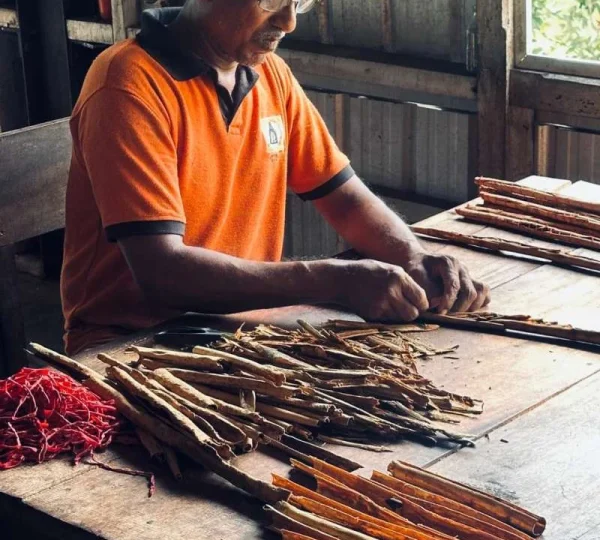
Cinnamon Sticks After Peeling Off the Bark
Cinnamon has played an important role in Sri Lanka’s history for centuries. The island’s position along major Indian Ocean trading routes helped connect its valuable spices with merchants from different parts of the world.
Long before modern tourism, Sri Lankan cinnamon was prized for its fragrance and flavor. It became an important trading commodity, attracting international interest and influencing the island’s economic history.
Why was cinnamon so valuable?
In earlier centuries, spices were highly valued because they were used in cooking, traditional preparations, and the preservation and flavoring of food. Before modern supply chains made spices widely available, high-quality cinnamon could command a premium price.
The Portuguese established influence over parts of Sri Lanka’s coastal trade during the sixteenth century. The Dutch followed in the seventeenth century, and the British later took control of the coastal territories in 1796 before the entire island came under British rule in 1815.
During these periods, cinnamon production and trade formed an important part of the colonial economy.
Why is Galle important to cinnamon history?
Galle, on Sri Lanka’s southern coast, was an important maritime trading center. Its location connected the island to international shipping routes, while nearby areas supported cinnamon cultivation and processing.
Today, Galle is famous for its historic fort, colonial-era architecture, narrow streets, and coastal atmosphere. Yet its connection to cinnamon offers visitors another way to understand the region’s cultural heritage.
Exploring the historic streets of Galle alongside a visit to a cinnamon-growing or processing area creates a more complete picture of the southern region. You can learn about the spice trade while also discovering the people, traditions, and landscapes that continue to shape local life.
If you are planning a visit, explore our Sri Lankan experiences for ideas to include in your itinerary.
How Is Sri Lankan Cinnamon Made? From Tree to Finished Product
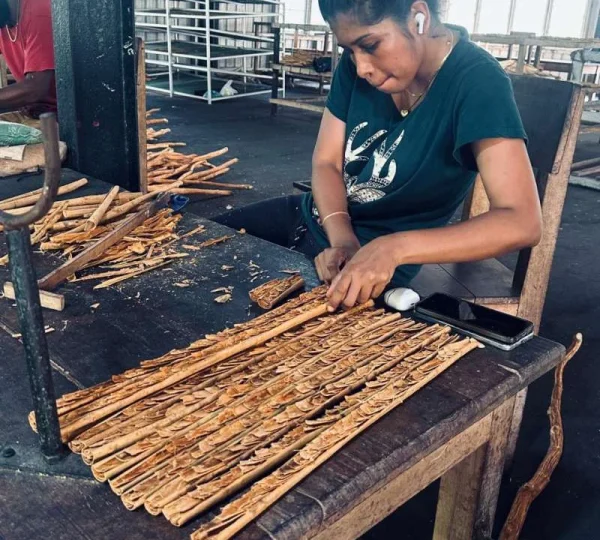
Ceylon cinnamon experience in Galle
One of the most fascinating parts of a cinnamon experience is seeing how the finished spice is produced. Traditional cinnamon preparation requires patience, practical knowledge, and considerable skill.
The process begins with the cinnamon tree and ends with carefully dried quills, powder, or other cinnamon products.
Step 1: Growing and harvesting the cinnamon tree
Cinnamon trees grow well in Sri Lanka’s warm, humid climate. They are cultivated in several parts of the island, particularly in the southern and southwestern regions.
Farmers maintain the trees and harvest suitable stems for processing. The valuable spice comes from the inner bark rather than from the wood itself
Step 2: Preparing the stems
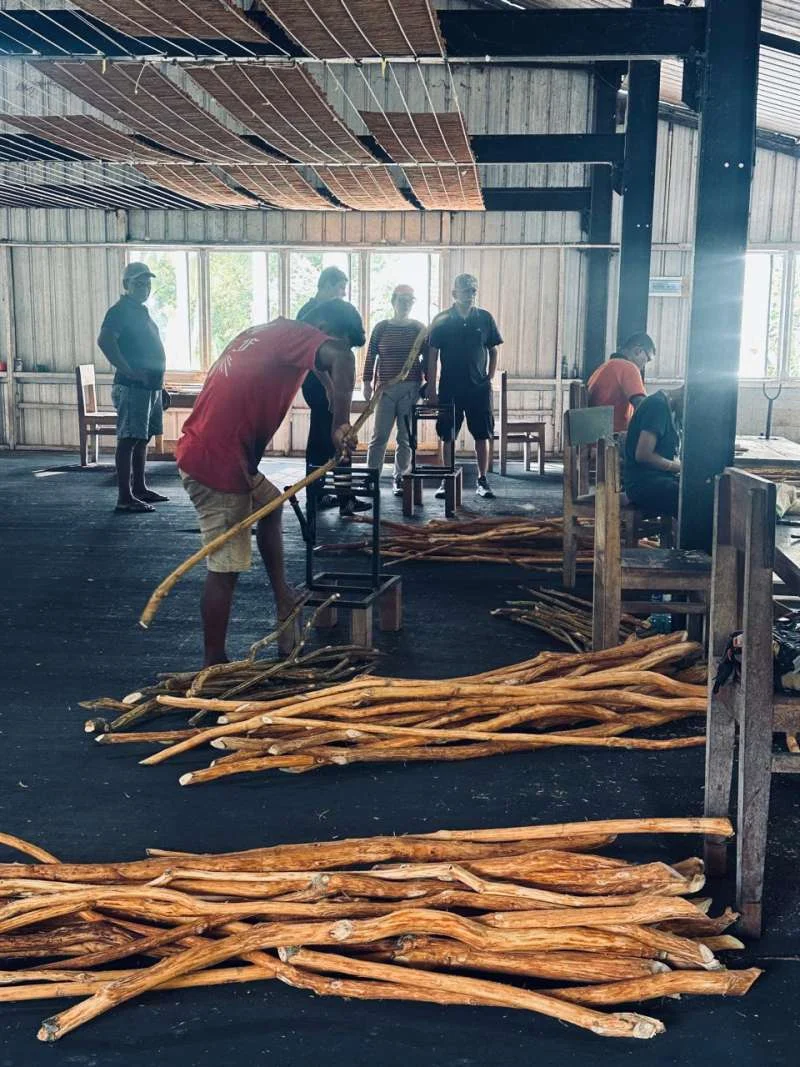
After harvesting, the stems are cut into manageable lengths. Workers prepare the bark for peeling and remove the rough outer layer to expose the inner bark beneath it.
This stage requires experience. The worker must handle the stem carefully to preserve the valuable inner layer.
Step 3: Removing the outer bark
The outer bark is scraped away using traditional tools. The exposed stem is then prepared for the delicate peeling process.
Although this may appear simple, preparing the bark correctly is important for producing good-quality cinnamon.
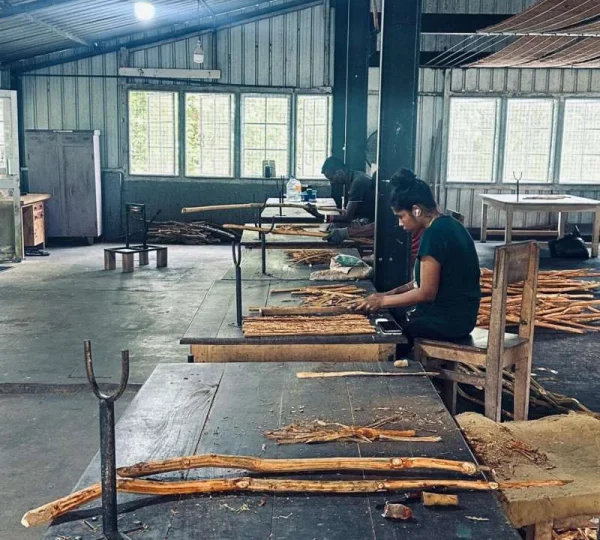
Step 4: Peeling the inner bark by hand
This is one of the most skilled stages of traditional cinnamon production.
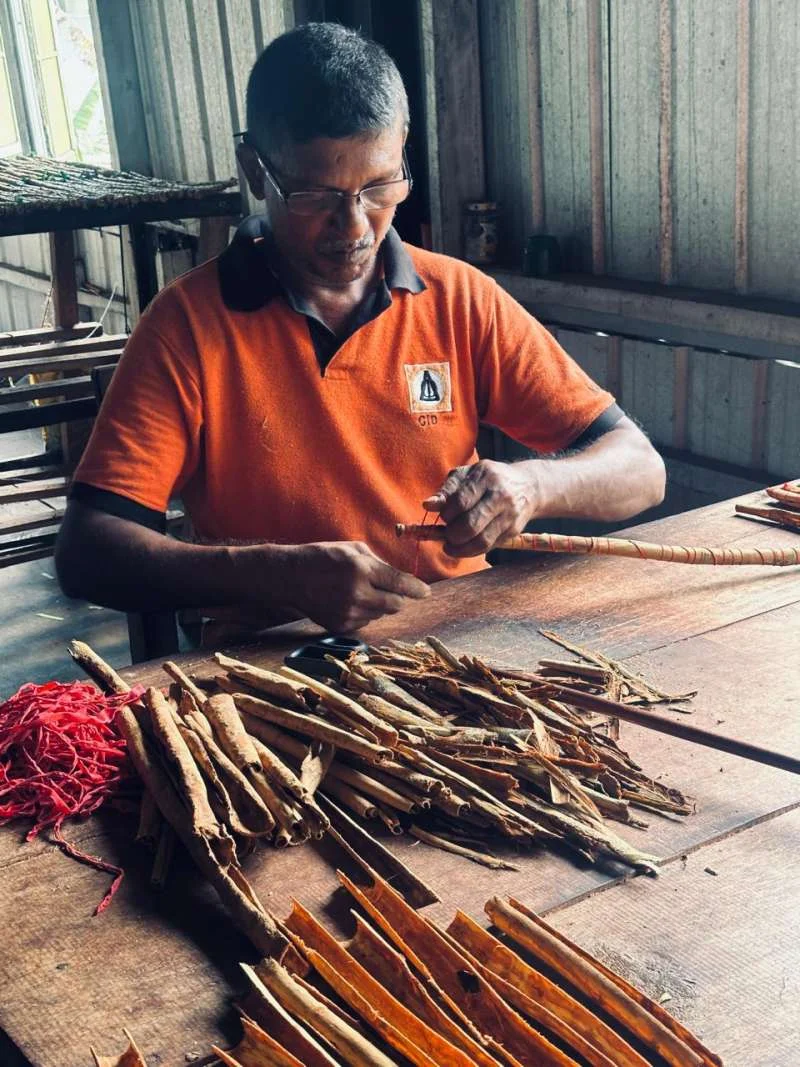
Experienced peelers carefully loosen and remove the thin inner bark using specialized tools. Their technique helps preserve the bark and prepare it for rolling.
The work requires patience, precision and years of practice. Cinnamon peeling is a specialized craft that has traditionally been passed from one generation to another.
Watching a skilled worker demonstrate this process gives visitors a deeper appreciation of the time and knowledge involved in producing cinnamon.
Step 5: Rolling the cinnamon quills
After peeling, the inner bark is prepared and rolled into long, hollow sticks known as cinnamon quills.
Several thin pieces of bark may be fitted together to form a longer quill. This creates the familiar layered appearance associated with Ceylon cinnamon.
The quality of the finished quill depends partly on the bark itself and the care taken during preparation.
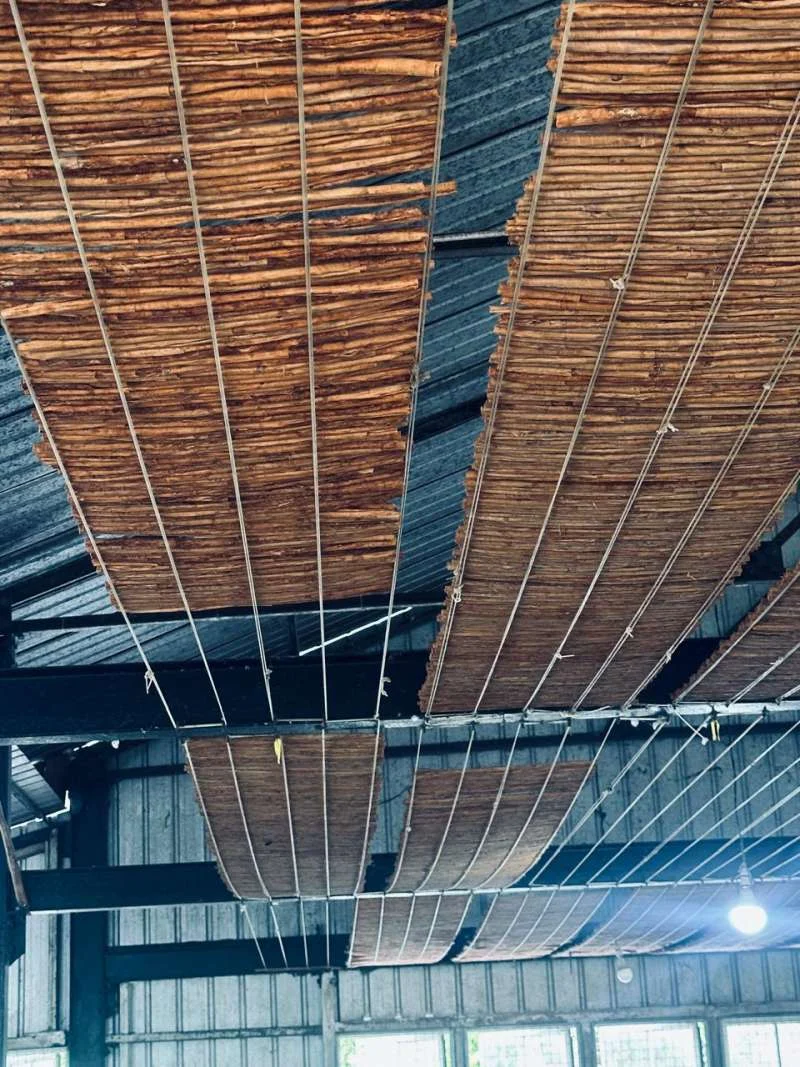
Step 6: Drying the cinnamon
The prepared quills are dried under suitable conditions until they reach the required moisture level.
During drying, they develop their characteristic color and aroma. Proper drying is essential for quality, storage and shelf life.
Step 7: Grading, cutting and packaging
Once dried, the cinnamon is sorted according to factors such as thickness, appearance and quality. The quills may be cut to size and sold whole, or further processed into powder, chips and other products.
Some producers also make cinnamon bark oil and leaf oil for different uses.
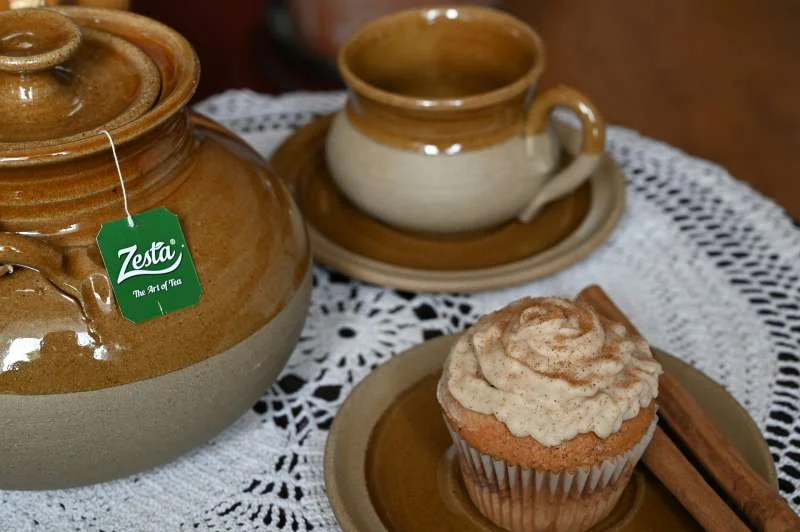
The next time you add cinnamon to a cup of tea or a favorite recipe, remember the traditional knowledge and careful work behind this simple ingredient.
Where Can You Experience Cinnamon Making in Sri Lanka?
If you want to learn about cinnamon production, Galle and the surrounding southern coastal region are excellent places to start.
The area combines agricultural landscapes, local communities and historic attractions. It is also convenient for travelers visiting Galle Fort, Unawatuna, Weligama and Mirissa.
What can you expect during a cinnamon experience?
Depending on the producer and the experience arranged, you may have the opportunity to:
- Learn how cinnamon trees are cultivated.
- Watch an experienced worker peel the inner bark.
- See how the bark is rolled into traditional cinnamon quills.
- Learn about drying, grading, and packaging.
- Discover how cinnamon production supports local livelihoods.
- Purchase cinnamon from a producer or reputable local seller.
Not every cinnamon farm or processing facility accepts visitors. Some demonstrations may require advance arrangements, so it is best to confirm availability before travelling.
Can you combine cinnamon making with a visit to Galle Fort?
Yes. A cinnamon experience can be a rewarding addition to a day exploring the southern coast.
You could arrange a visit to a cinnamon-growing or processing location and then explore Galle Fort, where you can walk through historic streets, visit local shops and enjoy the coastal atmosphere.
Depending on your interests and schedule, you could also visit Unawatuna Beach or explore a nearby village.
Travelers interested in local food and traditional lifestyles may enjoy a Sri Lankan village tour or other cultural activities.
With a private tour, you can plan your stops around your interests rather than following a fixed group schedule.
Sri Lankan Cinnamon Prices and Where to Buy It
The price of Sri Lankan cinnamon varies according to its grade, quality, form, packaging, and point of sale. A wholesale or farm-gate price is different from the retail price of a small packet sold in a supermarket or tourist shop.
What affects the price of Ceylon cinnamon?
Several factors influence the price:
- Grade: Fine, thin quills generally command higher prices than thicker or broken pieces.
- Processing quality: Carefully prepared and properly dried cinnamon may be more valuable.
- Product type: Whole quills, powder, chips, and oils have different prices.
- Packaging: Gift boxes and branded products may cost more than loose cinnamon.
- Place of purchase: Farm-gate, wholesale and retail prices can differ considerably.
How much does Sri Lankan cinnamon cost?
There is no single price for all grades of Sri Lankan cinnamon. Prices change with market conditions, quality, availability, and the quantity purchased.
For an accurate quote, ask the seller for the grade, weight, and price per kilogram. If you are comparing small packets, calculate the price per 100 grams to make comparisons easier.
Premium grades, such as fine Alba quills, can cost considerably more than lower grades or broken cinnamon. A higher price does not automatically mean that a product is the best choice for your needs. As a general guide, 1 kg of top-quality Ceylon cinnamon can cost around USD 20–30, depending on the grade, quality, and seller.
For the latest available market information, check the Ceylon cinnamon price reference, and confirm the date and grade covered by any published price.
Where is the best place to buy cinnamon in Sri Lanka?
Galle and the surrounding southern region are excellent places to explore Sri Lanka’s cinnamon-growing heritage. You may find reputable spice shops and local producers who can explain where their cinnamon comes from and how it is processed.
You can also buy Ceylon cinnamon in supermarkets, local markets, and specialist spice shops in other parts of Sri Lanka, including Colombo, Negombo, and Kandy.
Before purchasing, consider these tips:
- Look for packaging that clearly identifies Ceylon cinnamon and Sri Lanka as the country of origin.
- Check for the Pure Ceylon Cinnamon certification mark, where applicable.
- Ask whether the product is a whole quill, broken cinnamon, or powder.
- Compare the weight and price rather than judging by packet size.
- Choose sealed packaging with clear producer details.
- If buying directly from a farm, ask about the cinnamon grade, processing method, and storage.
Be cautious when visiting spice gardens along tourist routes. In particular, around Matale, on the road from Sigiriya to Kandy, you may encounter spice shops that rely on commission-based sales. Some of these stops are promoted to tourists by guides who receive commissions when visitors make purchases. This does not mean every spice garden or shop is dishonest, but the prices and product quality may not always offer the best value. You do not need to visit these places to buy good-quality Ceylon cinnamon.
Instead, you can purchase cinnamon from local markets and established spice shops. In Kandy, you could consider Bowatta Local Spice Shop and compare its products and prices with other sellers before making your purchase.
Whole cinnamon quills make attractive souvenirs, while cinnamon powder is convenient for everyday cooking and baking.
Finally, if you plan to take cinnamon home, check your destination country’s customs and agricultural import requirements before travelling.
The key is to allow enough time for each destination rather than trying to fit too many places into a short holiday.
Health Benefits of Sri Lankan Cinnamon: What Does the Research Say?
Cinnamon has a long history of use in cooking and traditional medicine. Modern researchers have studied its antioxidant properties and its possible effects on blood sugar and other aspects of health.
However, traditional uses and promising research findings should not be confused with proven medical treatments.
1. Cinnamon contains antioxidant compounds
Cinnamon contains naturally occurring compounds that show antioxidant activity in laboratory studies. Antioxidants help protect cells from damage caused by unstable molecules.
However, more research is needed to understand how consuming cinnamon affects long-term health in people.
2. It may influence blood sugar levels
Researchers have examined whether cinnamon can influence blood glucose and other metabolic measures. Some studies suggest possible benefits, but the evidence is inconsistent and does not establish cinnamon as a replacement for diabetes treatment.
People with diabetes should continue following their healthcare professional’s advice.
3. It adds flavor without requiring extra sugar
Cinnamon can make porridge, fruit, tea, and other foods more flavorful. Using it in cooking is one practical way to enjoy its aroma without relying on additional sugar.
4. Ceylon cinnamon generally contains less coumarin
One important characteristic of Ceylon cinnamon is its generally low coumarin content compared with cassia cinnamon. High coumarin intake can cause liver problems in some circumstances.
This makes the cinnamon variety worth considering for people who consume it regularly. Nevertheless, large quantities and concentrated supplements may carry risks.
Is Sri Lankan cinnamon safe to consume every day?
Cinnamon used in normal culinary amounts is generally considered safe for most people. However, safety depends on the amount consumed, the product, and individual health circumstances.
People taking medication or living with liver conditions should seek professional advice before using large amounts or concentrated cinnamon supplements.
For reliable health information, consult the US National Center for Complementary and Integrative Health’s guide to cinnamon, its usefulness and safety.
Discover Sri Lankan Cinnamon with Rokmi Tours
Sri Lankan cinnamon is much more than a spice. It represents centuries of trading history, traditional craftsmanship and the knowledge of local communities. From the cinnamon tree to the finished quills, every stage tells a story about Sri Lanka’s heritage.
For travelers who want to discover the island beyond its beaches and famous historical attractions, a cinnamon experience near Galle offers a meaningful opportunity to connect with local traditions.
At Rokmi Tours, we help travelers discover Sri Lanka through personalized itineraries, authentic cultural experiences, and opportunities to learn about local life. We can help you plan a journey combining Galle, cinnamon traditions and other highlights of the southern coast, according to your interests and travel schedule.
Ready to discover the real Sri Lanka?
Explore our Sri Lankan experiences or contact Rokmi Tours to plan your personalized trip.
Let Rokmi Tours help you discover Sri Lanka’s traditions, flavors and hidden treasures, one unforgettable stop at a time.